
ACO In-line Moisture Sensors
Authorised representative for ACO moisture measurement systems in Greece. Test sensors available for evaluation in your facility before commitment.
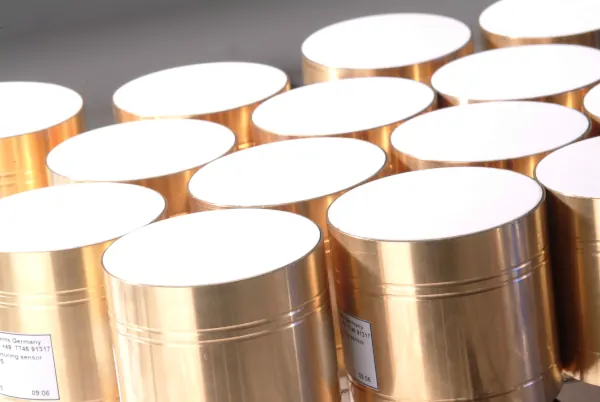
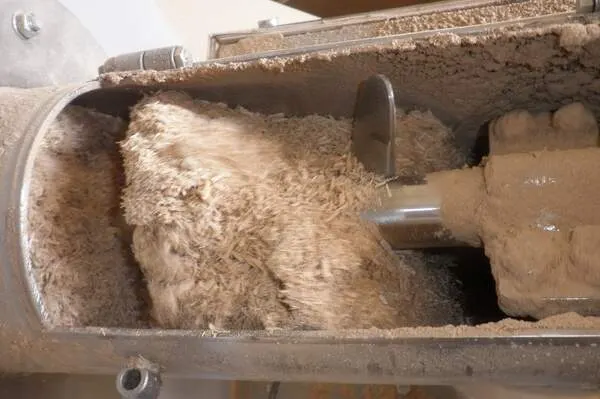
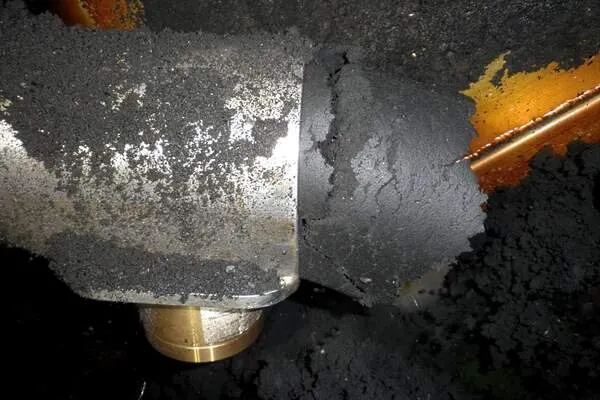
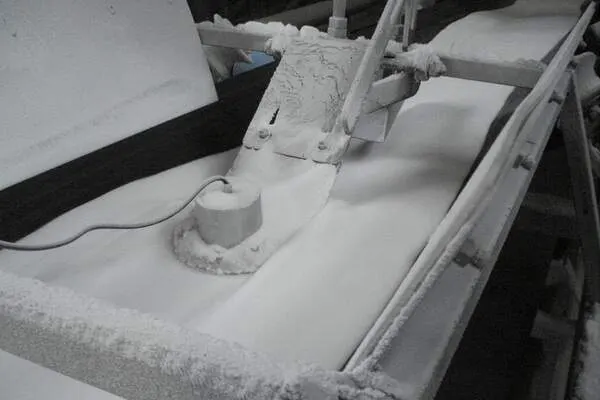
Continuous, non-destructive in-line moisture measurement for bulk solids and pastes
What moisture sensors are and why they matter
Every bulk material (sand, grain, clay, sawdust, salt, gypsum) carries an inherent moisture content that fluctuates with storage conditions, weather, and upstream process steps. When that moisture is unknown or uncontrolled, downstream quality suffers: dryers run inefficiently, mixtures fall out of specification, and products fail shelf-life or structural requirements.
Moisture sensors (also called moisture transmitters or in-line moisture measurement sensors) solve this by measuring the water content of a material continuously, directly inside the production line, and transmitting a real-time signal to the process control system (PLC or SCADA).
How the measurement works
The measurement is based on the capacitive principle: the sensor measures the relative permittivity (dielectric constant, εr) of the material in contact with its surface. Water has a permittivity of approximately 80, while dry bulk solids typically fall between 2 and 10. Any change in moisture content shifts the permittivity of the material, and this shift is captured by a stray-field capacitor behind a robust ceramic measuring surface.
The ACO sensor makes a high-frequency capacitive measurement of the dielectric shift εr of the product, enabling calibration to a 4…20 mA signal output giving the moisture content in mass percent. This signal is driven directly to the PLC or PROFIBUS/PROFINET network.
Non-destructive measurement
The method is non-destructive: the sensor reads the moisture content of the material as it passes through the production line without altering, sampling, or consuming any of the product. The process continues uninterrupted and the material proceeds to the next production stage.
The measurement reaches a depth of approximately 150 mm and is not affected by surface contamination. It reads bulk moisture, not surface moisture alone, so the reading represents the material and not just its outer layer.
Continuous output
The continuous output signal is especially useful in drying processes: the dryer controller receives a live moisture reading and adjusts temperature or residence time automatically, which avoids over-drying (wasted energy) and under-drying (rejected product).
Compared with other moisture measurement methods, the capacitive contact method is less affected by contamination, discoloration, particle size, and temperature of the material.
Measurement accuracy depends on the installation site. ACO’s application engineers work with customers to identify the optimal measurement position and, where needed, supply purpose-built installation kits to stabilise material flow at the sensor face.
Applications by industry and material
ACO moisture sensors are used in the industries below.
Food and beverage: salt, cocoa, flour, chips
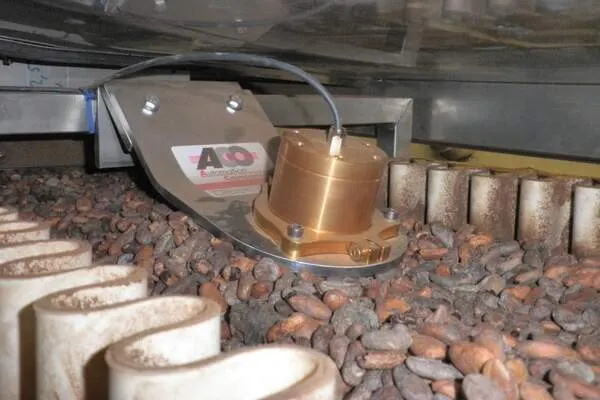
ACO ranks among the standard suppliers of moisture measurement for table and thawing salt in Germany and Austria. In cocoa processing, on-line measurement right before and after the dryer/roaster has been realised successfully several times with ACO sensors, enabling energy-efficient dryer control and improved quality of the cocoa intermediate product. Further food applications include flour, chips, coffee beans, and grain during drying.
Biomass and wood pellets: sawdust, wood chips
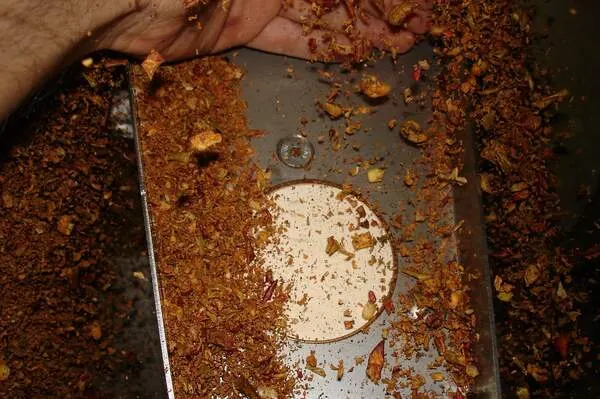
Wood pellets are pressed from sawdust and wood chips and require a precise moisture target to be pressable. ACO sensors measure residual moisture in real time and enable fast, exact control of the drying or conditioning process. If the residual moisture in wood chips is not correct, the hammer mill clogs, the pellet mill overheats, and the wood pellets crumble. In the wood pellet sector of Germany, Austria, and Switzerland, ACO moisture measurement systems have become indispensable.
Gypsum and building materials: FGD gypsum, fibreboards
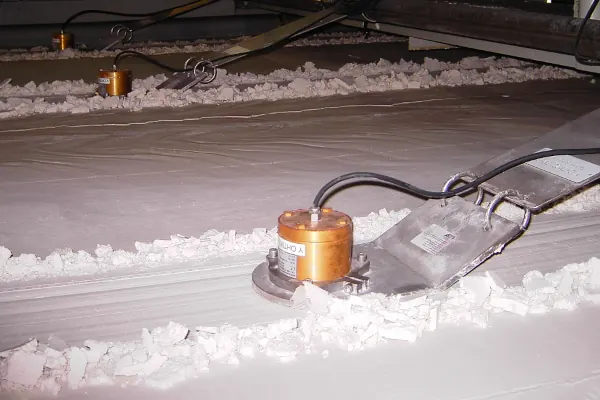
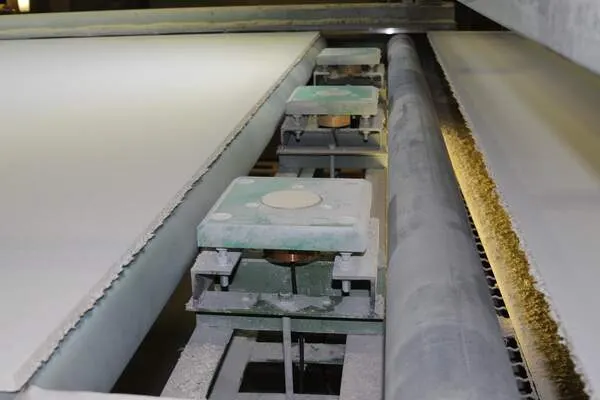
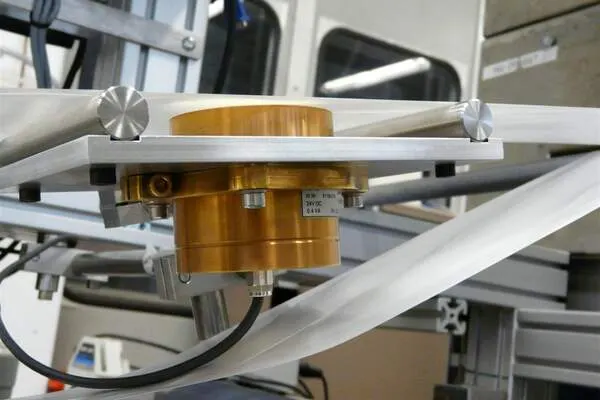
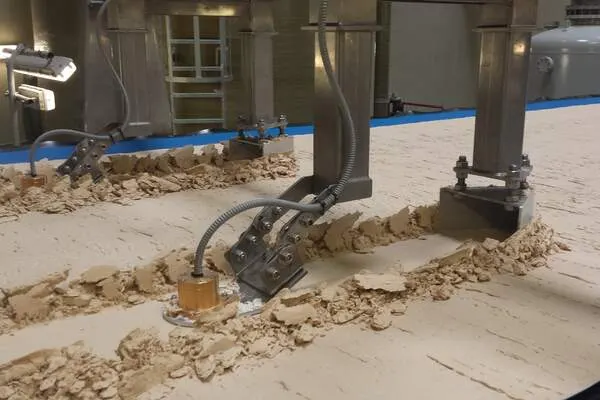
ACO sensors have been successfully used for on-line moisture measurement of FGD gypsum in power plants for more than 10 years. In gypsum fibreboard production, three ACO sensors installed side by side on a roller conveyor allow measurement across different board thicknesses without any need for adaptation.
Mineral products: sand, gravel, slag, foundry sand
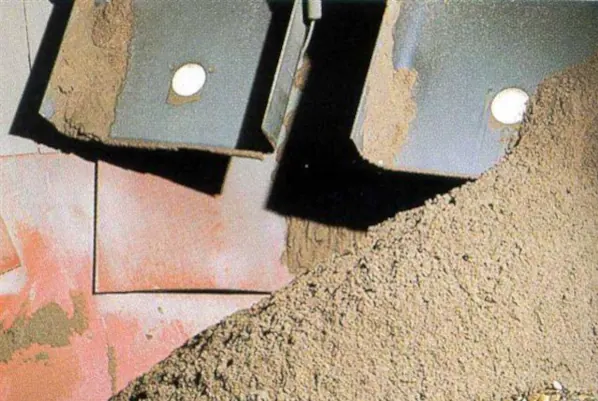
Whether in the production of ready-mixed concrete, dry mortar, or in the foundry industry, the residual moisture content of the aggregates is a quality factor. Hundreds of ACO moisture measurement sensors are used in this sector. In dry mortar production, the ACO sensor is able to measure residual moisture down to 0.3%.
Raw materials and ores: iron ore, coal, limestone
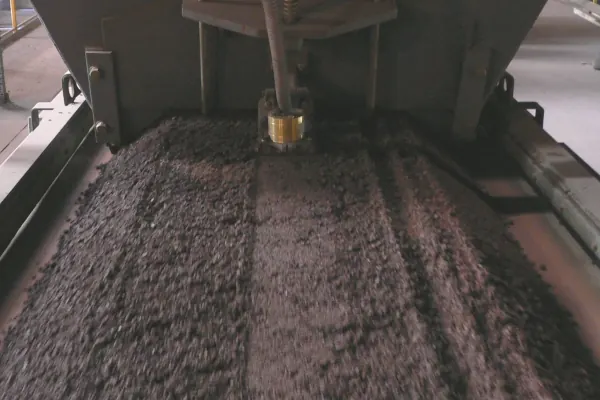
Iron ore, coal, quartz sand, and other components are mixed and sintered before being melted in a blast furnace. ACO sensors determine the residual moisture of these products in real time before they are mixed. In sinter plants, ACO sensors are used for their robust construction, easy handling and reliability.
Clay and ceramics: bricks, roof tiles
In the production of bricks and roof tiles, the water content is as important for the drying process as it is for firing. ACO sensors continuously monitor it. A compaction unit (type TFM1) installed right after the screen feeder has proven itself in multiple installations over many years.
Environment and sludge: sewage sludge, lignite ash
The residual moisture of sewage or digested sludge is measured after dehydration (e.g. by centrifuge) or after drying. An ACO sensor installed in a screw compactor achieves constant material conditions, which significantly improves measurement accuracy. For lignite ash, the ACO sensor determines residual moisture in real time; if results fall below the guideline value, the material is re-moistened.
Chemical and pharmaceutical: bicarbonate, tungsten carbide
In the chemical and pharmaceutical sector, moisture content is a quality criterion. Raw, intermediate, and final products appear in textures ranging from granulate and powder to dust and paste, requiring detailed and accurate planning of on-line moisture measurement.
Animal feed: grain, corn, rapeseed, feed pellets
Moisture content is a decisive factor in the quality and shelf life of animal feed. ACO sensors have been used to determine moisture content in corn during drying, and in fish food pellets and concentrated feed.
Available models: ACO sensor families compared
DMMS, BMMS, and MMS are all based on the capacitive measuring principle, but differ in construction, range of functions, and type of signal output.
| Feature | DMMS | BMMS | MMS |
|---|---|---|---|
| System type | Digital, modular | Digital, compact | Analogue |
| Evaluation unit | Central unit required | None (sensor only) | None (sensor only) |
| Max. sensors per unit | Up to 16 | 1 | 1 |
| Signal output | Profibus DP / Profinet; optional 4–20 mA | 4–20 mA; optional RS485 | 4–20 mA / 0–20 mA / 0–10 V |
| Calibration | In-process (online) | In-process via PC software | Outside process, via potentiometer |
| Material curves per sensor | Up to 16 | Up to 8 | 2-point |
| Measuring accuracy | ±0.1% moisture | ±0.05% moisture | ±0.1–0.5% moisture |
| Material temperature range | 4–80 °C (up to 100 °C option) | 0–80 °C | 4–50 °C (up to 80 °C option) |
| Measuring depth | ~150 mm | ~150 mm | ~150 mm |
| Sensor dimensions | Ø 76 mm / H 70 mm | Ø 76 mm / H 70 mm | Ø 76 mm / H 70 mm |
| Housing / wear surface | Stainless steel / ceramic (ZrO₂Al₂O₃) | Stainless steel / ceramic (ZrO₂Al₂O₃) | Stainless steel / ceramic (ZrO₂Al₂O₃) |
| Protection class | IP68 | IP68 | IP67 |
| ATEX option | Zone 21/22 | — | — |
| Sensor exchange | Calibration curves transferable 1:1 | 1:1 exchangeable, no recalibration | — |
| Best suited for | Large plants, multiple points, digital integration | Single-point compact installations | Simple, stable single-point applications |
Frequently asked questions
Q: How does a capacitive moisture sensor work?
The sensor measures the permittivity of the material, which rises with its water content. After material-specific calibration it delivers a continuous moisture signal in real time. The principle is described in more detail under “How the measurement works” above.
Q: Is the measurement non-destructive?
Yes. The capacitive sensor reads the dielectric properties of the material as it passes the sensor face. The product is not sampled, altered, or consumed in any way. The material continues to the next production stage completely intact. This makes ACO sensors suitable for food, pharmaceutical, and other applications where product integrity is essential.
Q: Does the sensor need to be calibrated for each material?
Yes. Every moisture measurement must be calibrated to the respective material and the specific process conditions. The sensor records an electrical parameter influenced by the material’s permittivity, and the moisture content is calculated for each specific material based on this correlation. Calibration is performed via PC software (DMMS, BMMS) or via rotary potentiometer (MMS), and can be carried out directly in the installed position for the DMMS and BMMS systems.
Q: Which materials can ACO sensors measure?
Capacitive online moisture measurement is suitable for many non-conductive bulk solids. Typical applications include biomass, sawdust, mineral raw materials, gypsum, clay, salt, animal feed, foodstuffs, powders, granulates, and numerous recycled materials. Restrictions arise primarily with very coarse or highly inhomogeneous materials and with highly conductive substances.
Q: When do I need an installation kit?
An installation kit makes sense if the material flow fluctuates significantly, no constant material height is present, the material is very loose or subject to strong structural changes, or reproducible laboratory reference values are required. ACO offers a range of standard kits (TFM1, SFM1, SFM1-Hack, SFM4, PN1) as well as custom-designed solutions.
Q: Can one evaluation unit handle multiple measurement points?
The DMMS system supports up to 16 sensors per central evaluation unit, connected via bus technology. The bus system can manage a maximum cable length of 1,200 metres, which covers even very large facilities. An averaging function across 2–3 sensors is also available for wide conveyor belts or heterogeneous materials.
Q: Are the sensors suitable for hazardous (ATEX) areas?
The DMMS system is available with ATEX approval for use in potentially explosive atmospheres (Zone 21 or 22).
Q: Is local support available in Greece?
Yes. process.gr is the authorised representative for ACO moisture measurement systems in Greece. We provide application consulting, on-site installation support, and access to test units, so you can evaluate the technology in your own production environment before making a purchasing decision.
Contact us to arrange a demonstration or to discuss your specific application. Test units are available for trials in your facility.
Which sensor to choose?
- BMMS: one or a few measuring points, high accuracy and a 4…20 mA signal straight to the PLC, calibration in the process and 1:1 sensor exchange. The usual choice for a new installation.
- DMMS: many measuring points or a large plant, digital connection via Profibus DP or Profinet, up to 16 material curves per sensor and versions for ATEX dust zones.
- MMS: simple, non-critical applications with an analogue signal and lower accuracy, calibrated with a potentiometer outside the process.
In every case, the installation position affects accuracy.
Why Choose ACO
- No maintenance: the ceramic ZrO₂Al₂O₃ wear surface resists abrasion in harsh environments
- Non-destructive, 150 mm depth measurement: reads bulk moisture, not surface alone
- Continuous 4–20 mA / Profibus DP / Profinet output: direct PLC integration
- Sensor exchange without recalibration: BMMS 1:1, DMMS curves transfer completely
- Manufactured in Germany. Local technical support in Greece through process.gr


Test sensors available — contact us to arrange a demonstration in your facility
Request a demonstration