
Turn Your Wastewater Streams into Recoverable Resources
In most food processing and industrial facilities, wastewater is treated as a problem to be disposed of — a cost center with no return.
But with the right separation technology, that same stream can become a source of recovered product, reusable water, and measurable savings. AMKCO vibratory separators, supplied in Greece and Cyprus by PES, are purpose-built to do exactly that.
Why Vibratory Separation Works for Wastewater
A vibratory separator is, at its core, a continuously self-cleaning filter. It extracts solids from a liquid stream and produces a cleaner liquid fraction — but what makes AMKCO’s approach distinctive is reliability under real industrial conditions.
Wastewater streams are rarely clean or predictable. Grease, fibres, and fine particles can blind a conventional screen within minutes. AMKCO separators are equipped with high-quality cleaning systems — cleaning sliders, bouncing balls, ultrasonic transducers, spray nozzles, and CIP connections — specifically adapted to the operating situation, keeping screens permeable and capacity consistent over long, continuous runs.
The result: screening down to 30 microns, transforming your wastewater into a significantly cleaner effluent, with the recovered solids often convertible into a valuable by-product or returned directly to the process. Custom configurations can exceed capacities of over 100 m³/hour, all within a compact footprint of less than 3 square meters.
A Proven Pre-Filter for Membrane Systems
One of the most impactful applications for AMKCO vibratory separators is as pre-filtration ahead of membrane systems — Ultrafiltration (UF) or Reverse Osmosis (RO).
Membranes are precision instruments. Coarse particles that pass unchecked into a membrane system cause unnecessary loading, accelerated fouling, and in some cases irreversible damage. With an AMKCO vibratory separator upstream — fitted with a 32 or 43 micron screen — the liquid entering your membranes is guaranteed to contain no particles above that threshold. The membranes are stressed only by what is relevant to their function, not by material that could have been removed earlier and more cheaply.
The practical outcome: significantly extended membrane service life and a faster return on your filtration investment.
Application Examples Across Process Industry
AMKCO separators have been deployed across a wide range of wastewater and process water applications. Here are some of the most common in food processing and related industries:
| Application | What the Separator Does |
|---|---|
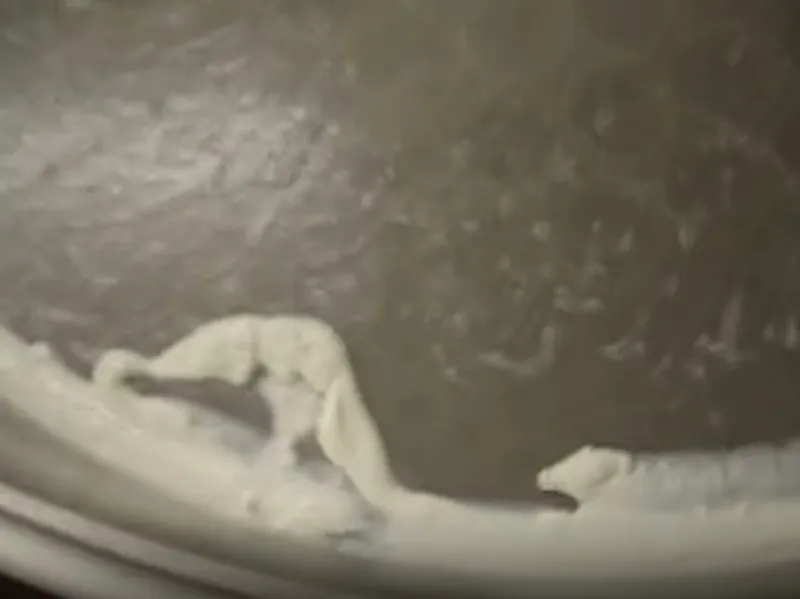
| Cheese whey filtration | Recovers approx. 3 kg of cheese fines per 1,000 kg of whey processed |
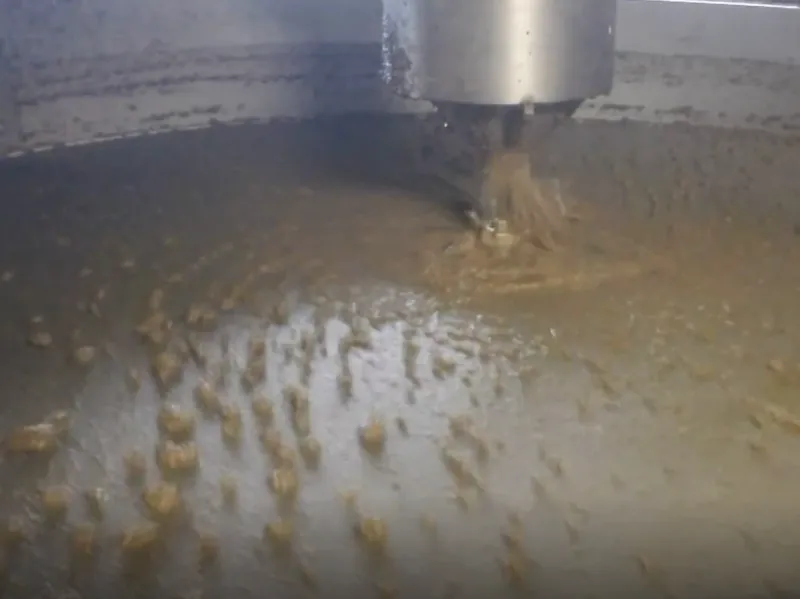
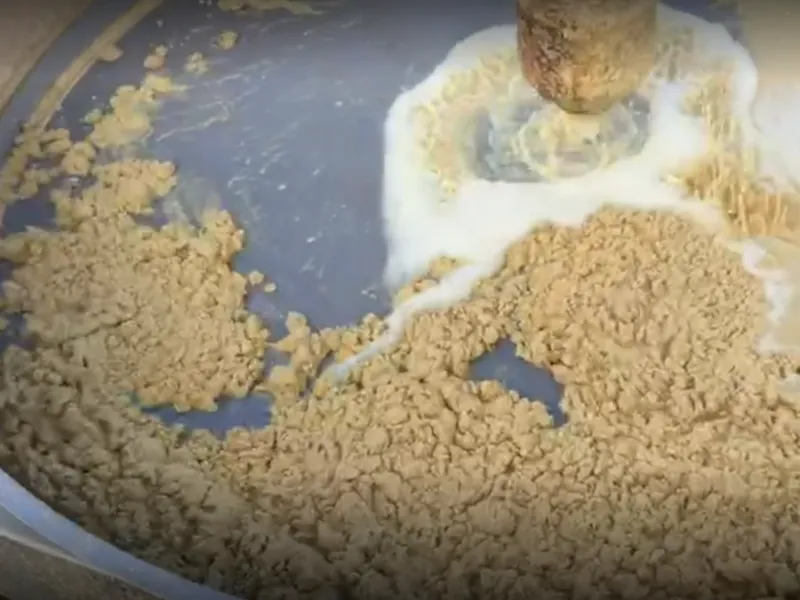
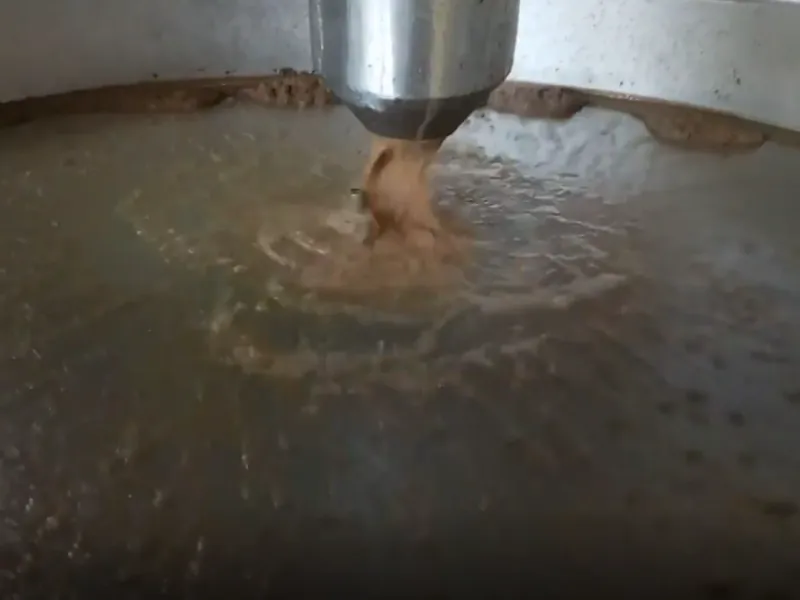
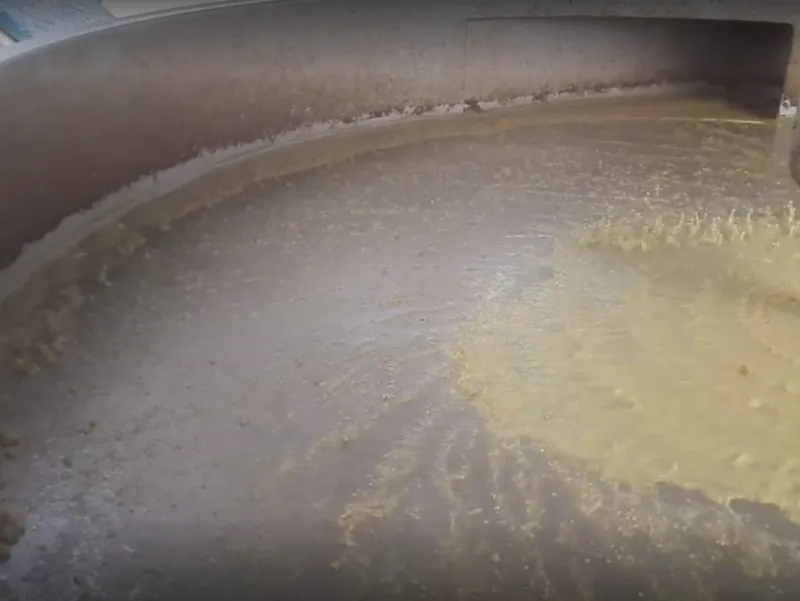
| Olive oil black water | Recovers fresh olive paste from three-phase decanter effluent at ratios of 70 to 150 kg of solids from 1,000 kg of olives processed |
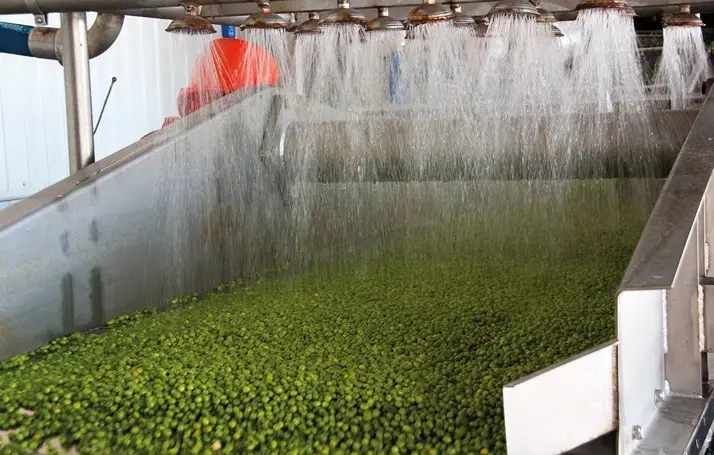
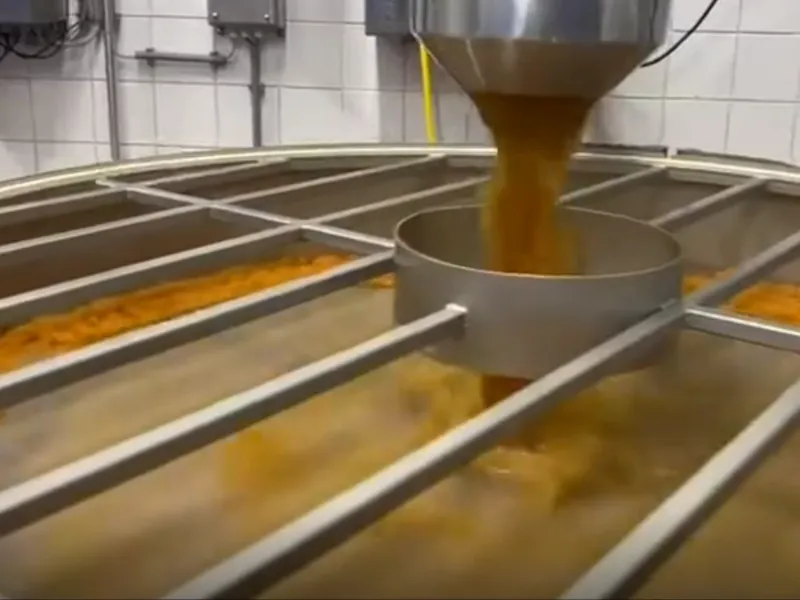
| Vegetable wash water | Cleans and recycles wash water from olives, carrots, potatoes, peaches, apples and more |
| Brine cleaning | Recycles saturated salt solutions hygienically in dairy, salt production, and olive de-pitting |
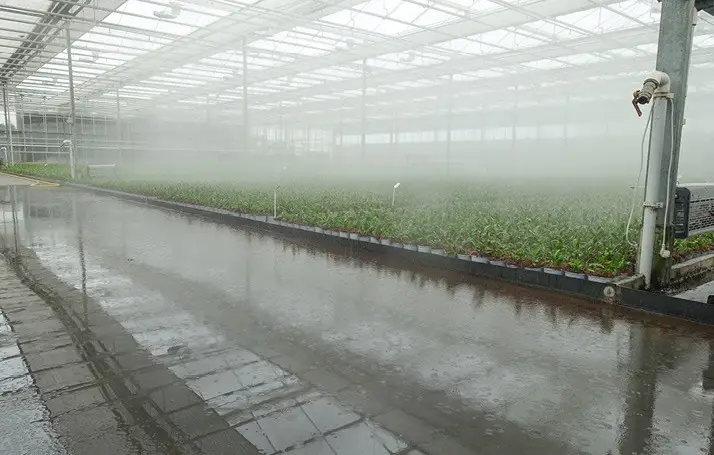
| Greenhouse water | Separates solids from irrigation runoff; nutrient-rich horticultural water is 100% reusable as plant food |
| Plastic production water | Reduces raw water consumption in plastics manufacturing |
| Canning & food processing effluent | Cleans waste streams from canning operations |
| Manure & animal waste | Solid-liquid separation for agricultural and farm waste streams |
Beyond food processing, AMKCO separators have also been used in hospital effluents, industrial laundries, frying oil recovery, and paper industry white water cleaning.
How Does a Vibratory Separator Work?
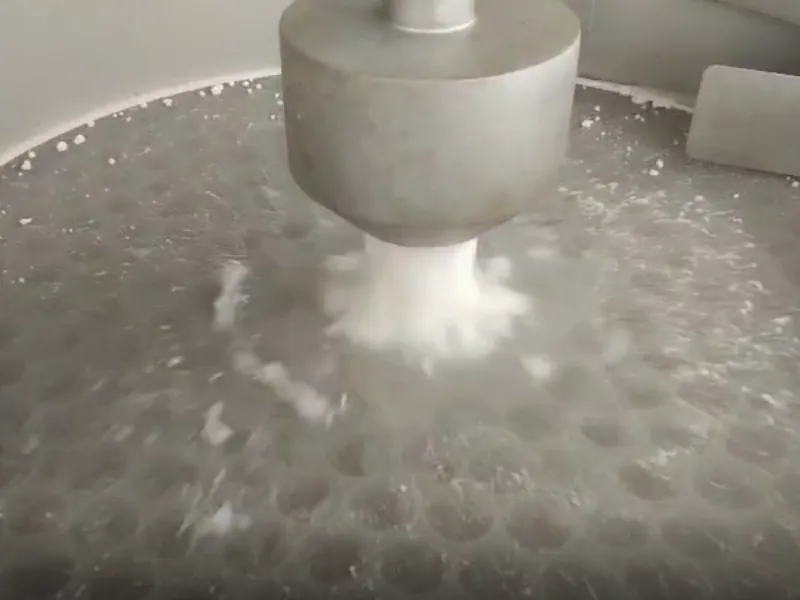
The AMKCO vibratory separator operates on the principle of asymmetric weights. One weight is mounted at the top of the motor shaft, a second at the bottom. This converts the motor’s rotational movement into a true three-dimensional motion — horizontal, vertical, and inclined — that drives product across the screen in a controlled spiral path.
By adjusting the angular relationship between the weights, the product flow pattern and residence time on the screen can be precisely tuned to your specific material and separation target.
Key technical parameters:
- Screen apertures from 11,000 µm down to 20 µm (625 mesh)
- Machine diameters from 18" (46 cm) to 72" (183 cm)
- Up to four successive screen decks for multi-fraction separation
Customisation to Your Process
Together with AMKCO Europe B.V. (Netherlands), PES offers custom-engineered filtration solutions designed around your specific process conditions and environmental targets.
Customisation options include:
- Multiple screen decks — optimise solid size distribution from coarse to fine in a single pass
- CIP connections — for hygienic, in-place cleaning in food-grade environments
- Spray nozzles — to maintain screen permeability with challenging products
- Screen materials — stainless steel, polyester, anti-static, and more
- Scalper, de-dusting, and classifying frame configurations — matched to your solid/liquid ratio and capacity requirements


Ready to Explore What's Possible with Your Wastewater Stream?
Every process is different — and the right configuration depends on your flow rates, solid characteristics, and downstream requirements. Speak with our engineers directly. We'll review your application, discuss feasibility, and if needed, arrange a test with an AMKCO unit in your own facility before any commitment is made.